“No significant difference” in audio: read the test conditions

A listening-test headline can be tempting when you are choosing an export format. Before treating it as an answer for your recording, write down the exact question the experiment asked. A finding about a selected set of excerpts does not automatically answer a recipient’s compatibility question or establish that two files contain identical bytes.
Start with the paper and its version, rather than a screenshot of one result. Keep the authors’ conclusion beside the conditions that produced it. The useful outcome is a traceable reading note you can revisit when your actual delivery requirements change.
Separate the claim you need from the claim reported
For a practical handoff, you may need several different answers:
- Will the recipient’s editing system accept the file?
- Does it contain the expected source material and channels?
- Did a particular listening experiment detect an impairment?
- Did that experiment assess equivalence within a stated margin?
Do not let a confident answer to one replace the others. If your recipient requires a specified format, confirm that requirement directly. If you need stream and channel metadata, the FFprobe inspection guide addresses the reported file structure. Neither check supplies the result of a listening experiment.
Read one recent example in its actual scope
Benjamin Martin and Romain Hennequin’s October 2026 Opus preprint reports separate difference and equivalence analyses. In its first phase, the 128 kbps condition had no statistically significant degradation but did not pass the authors’ equivalence assessment. The first analysis retained 21 listeners from a recruited panel of 26 Deezer volunteers, using 23 excerpts. A second phase selected 10 more critical listeners and 8 harder excerpts. The authors report different outcomes under those conditions.
The methods identify a particular codec version, encoding configuration, level preparation, listening setup and participant-selection procedure. The arXiv record describes a submission for possible ICASSP 2027 publication. Treat it as the identified preprint, rather than assuming acceptance or applying its bitrate conclusion to every codec, recording and listening system.
Keep a method’s name attached to its requirements
ITU-R BS.1116-3, approved in 2015 with later editorial amendments, concerns assessment of small audio impairments. It describes a controlled hidden-reference method and requires care in interpreting a failure to detect differences. Its discussion includes experimental sensitivity, material selection and listener expertise.
A casual comparison on your desk does not become a standards-conforming test by borrowing that name. Record what was actually controlled and what was not. If the paper reports a formal procedure, inspect the procedure rather than reducing it to a label in your notes.
For historical context, John Vanderkooy’s 2010 AES paper abstract describes a digital-domain comparison proposal with aligned timing and identical levels. We read the abstract, not the full paper. It is another reason to distinguish a test’s preparation from the size or sample-rate label of its files.
Make a compact reading record
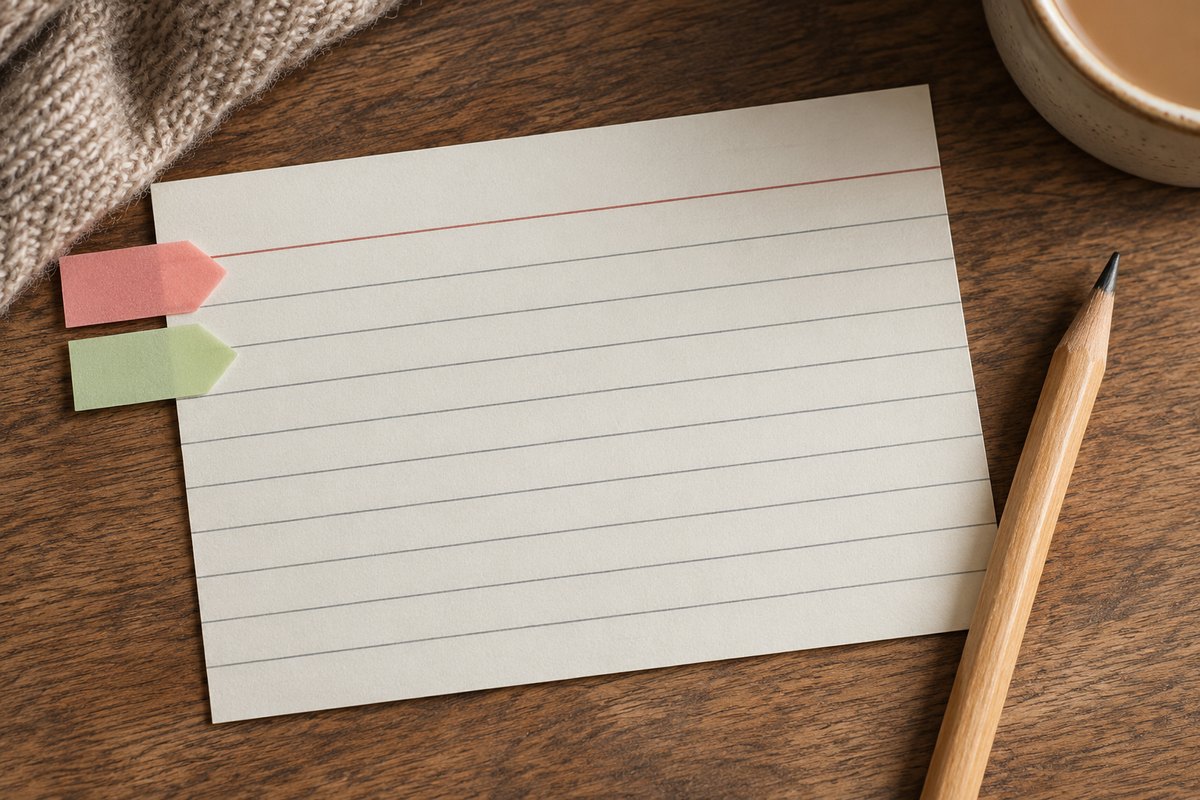
The blank listening-claim reading card gives you a place for the exact source, question, tested material, listeners, preparation, outcome and author-stated limitations. Include an unresolved field when a detail is missing.
Keep a distinction between what the authors report and what you infer for your own task. For example, if your intended source material was not represented, write that down. Do not silently replace it with “all audio.” If you cannot identify the comparison margin or analysis used, retain that uncertainty instead of translating a headline into a universal guarantee.
This card records an interpretation of a publication. It is not a test platform, statistical calculator or collection of listener results.
Use the note for the decision you actually face
Return to the delivery question after reading. Which requirement does the paper help you discuss? Which requirement still needs a file check, recipient confirmation or a separately designed experiment?
We rechecked the cited sections and abstract on 13 November 2026 for this guide. We did not run a listening study, play audio, reproduce the authors’ analysis or determine a new codec threshold. The card is blank, and no listener preference or product-quality result is claimed.